Quick answer
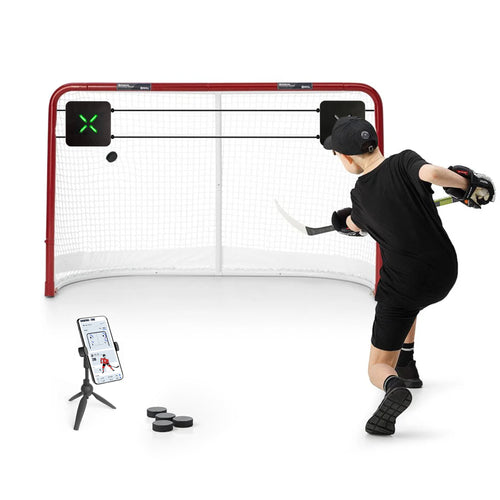
The best off-ice hockey games for kids need nothing more than a stick, a ball or light puck, and a hallway or driveway: target knockdown, obstacle races, hallway 1v1, H-O-R-S-E with shots, and mini shootouts all build real skills while feeling like pure play. For structured fun that runs itself, the light-up XDT Xtreme Shooting Targets add app-scored reaction rounds, and a rebounder or sauce combo turns solo sessions into score challenges — they keep kids training long after a drill list would have been abandoned.
Key takeaways
- Games beat drills for kids under 10 — same puck touches, zero motivation battles.
- Most of these 10 games need only sticks, a ball, and household objects.
- Every game has a score, a clock, or an opponent — that's what makes kids ask to play again.
- Rounds of 2–5 minutes; rotate games before anyone gets bored.
- Light-up reaction rounds and rebounder or sauce score challenges extend sessions without a parent running them.
10 off-ice hockey games kids actually ask to play
All ten work indoors with a stickhandling ball or outdoors with a light puck. Setup time is under two minutes each. Games beat drills for kids because the score and the opponent do the coaching — and from years of running youth sessions, I can tell you that a motivated 7-year-old chasing a target gets more quality touches in 10 minutes of a game than 30 minutes of a formal drill.
| Game | Players | Gear | Best ages |
|---|---|---|---|
| Target knockdown | 1+ | Sticks, ball, 5 bottles or cones | 5–10 |
| Obstacle course race | 1+ | Sticks, ball, household objects | 5–12 |
| Red light–green light | 2+ | Sticks, one ball each | 5–8 |
| Hallway 1v1 | 2 | Sticks, soft ball, two "goals" | 6–13 |
| Hockey H-O-R-S-E | 2+ | Sticks, ball, any target | 8–13 |
| Mini shootout series | 2+ | Sticks, ball, goal or taped target | 5–13 |
| Keep-away king | 3+ | Sticks, one ball | 8–13 |
| Around the clock | 1+ | Sticks, ball, 4 targets | 8–13 |
| Sharks and minnows | 4+ | Sticks, one ball each | 6–11 |
| Beat the clock relay | 2+ | Sticks, ball, cones | 7–13 |
Rules and setup
- Target knockdown. Five bottles on a bench or line, shoot from 3–5 m. First to knock all five wins; solo players count shots needed and chase their record.
- Obstacle course race. Build a slalom from shoes, cones, or toys — around the chair, under the table, finish with a shot. Time each run; fastest clean run wins. Shrink the gaps between obstacles after two sessions to force quicker, tighter hands.
- Red light–green light. Caller shouts "green" (dribble forward) and "red" (freeze the ball dead). Moving ball on red sends you back to the start. First across the line calls the next round.
- Hallway 1v1. Two doormats or taped squares as goals, 60-second periods, no goalies. Best of five periods. Soft ball only — house rules protect lamps.
- Hockey H-O-R-S-E. Player one calls a shot ("backhand, off the wall, top corner"). If they make it, everyone must copy or take a letter. Five letters and you're out.
- Mini shootout series. Five shots each on a goal or taped target zone, parent or sibling in goal with a glove. Track the series score all week — Friday is the final.
- Keep-away king. One ball, small area, everyone tries to steal and hold it. Whoever holds the ball at the whistle (30–60 s) takes the point. Teaches puck protection without a single instruction. Cue for older kids: "keep your body between the ball and the defender — use your hip, not your stick."
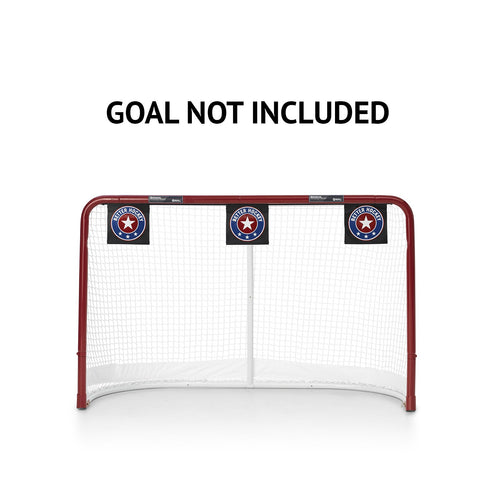
- Around the clock. Four targets in the goal corners (or taped squares). Hit them in order — 1, 2, 3, 4 — fewest shots wins. Corner shooting targets make this one feel official.
- Sharks and minnows. Minnows dribble across the zone; the shark tries to poke their ball away. Lose your ball, become a shark. Last minnow wins and starts as the next shark.
- Beat the clock relay. Teams run a cone course one at a time; total team time wins. Uneven numbers? One kid races their own previous time. Drill cones make the course rebuildable in seconds.
Coaching rule for all ten: you're the referee and the hype man, never the technique police. The skills build themselves through touches.
Coach Erik's tip The obstacle course is more valuable than it looks. When I run it at youth camps I quietly watch the kids who struggle — nine times out of ten it's not their hands that are the problem, it's that their eyes are glued to the ball. After the run I ask them how many cones they saw. Most don't know. That's the real coaching moment: next run, pick your eyes up and count the cones out loud. Hands-up handling changes fast once the eyes are free.

Smart targets, rebounder, and sauce: structured fun that runs itself
The ten games above need a parent or sibling to run them. These three tools cover every other day:
- Reaction rounds with XDT targets: the XDT Xtreme Shooting Targets 2-pack ($249.95 CAD) are light-up, app-connected targets that clip onto a standard net. In reaction mode the app lights a random target and the shooter has a few seconds to hit it — chase-the-light shooting that trains hands and eyes at game speed while the app keeps score.
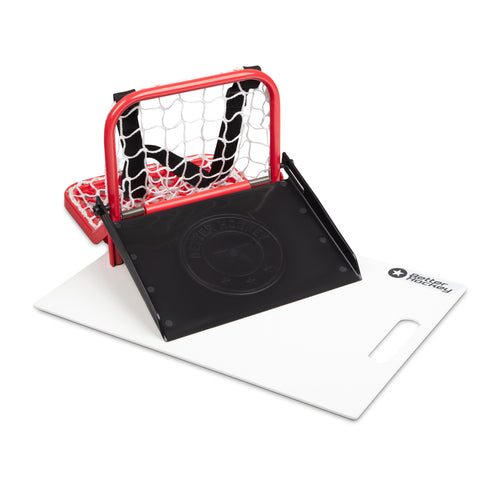
- 1v1 rebounder battles: two players, one Extreme Hockey Rebounder ($99.95 CAD), alternating turns. One point for every clean one-touch return, first to 10. The score settles every argument, and siblings will grind out rematches for an hour.
- Sauce challenges: with the Extreme Hockey Sauce Combo (single) ($149.95 CAD), kids launch saucer passes into the catcher — a point for every clean catch, and it works on the lawn or driveway.
- Timed challenges: 60 seconds, beat your high score — most one-touch returns off the rebounder, or most targets hit in reaction mode. The same "one more run" loop as a video game, except it's hundreds of real puck touches.
How to run a game night that builds skills
- Pick 3–4 games, not all ten. Example: obstacle race, H-O-R-S-E, 1v1 rebounder battles, XDT reaction-round finale.
- Cap each game at 5 minutes or a fixed score (first to 5). Rotate before energy dips.
- Keep a running champion board on the fridge — weekly winners, personal bests, silly trophies.
- Let the kids tweak the rules. Ownership doubles engagement, and their versions are usually harder. The rule changes kids invent almost always add a constraint — smaller space, weak hand only, one eye closed — and constraints are exactly how skill coaches design progressions.
- Finish with the favorite. 30–45 minutes total, ending on the game they love most.
Coach Erik's tip The champion board on the fridge is not a small thing. Kids who know their record is tracked will chase it without anyone asking them to. I've had parents tell me their child went out to beat their obstacle-course time three nights in a row — that's self-directed practice, which is the hardest thing to create and the most valuable. Write the times down. It matters.
Common mistakes
- Turning games back into drills. The moment you correct grip mid-game, it's a drill. Fix: save one tip for after, or skip it.
- Playing one game too long. Even the best game dies at minute twelve. Fix: rotate at 5 minutes, leave them wanting more.
- Using a heavy regulation puck indoors or with small kids. Fix: stickhandling ball inside, light puck outside for under-9s.
- No score, no stakes. "Just play around" loses kids fast. Fix: every game gets a winner, a time, or a record to break.
- Making the parent the permanent opponent. Kids need to beat someone sometimes. Fix: handicaps (weak hand only, half points for adults) that make winning possible and losing funny.
FAQ
What are good off-ice hockey games for young kids?
Target knockdown, obstacle course races, red light–green light with a ball, sharks and minnows, and mini shootouts. All need only sticks, a soft ball or light puck, and household objects, and each round takes 2–5 minutes — perfect for ages 5–10.
Can hockey games replace drills for kids?
For players under about 10, mostly yes. A game of keep-away delivers the same puck-protection reps as a formal drill, with none of the motivation battle. From around age 11, blend games with short structured routines like a 50-shot session.
How do XDT shooting targets work for kids' games?
The XDT Xtreme Shooting Targets are light-up targets that clip onto a standard net and connect to a smartphone app. In reaction mode the app lights a target and the shooter has a few seconds to hit it, so kids get dozens of shots while feeling like they're playing an arcade game.
What hockey games can kids play without a parent running them?
Rebounder battles, timed challenges, sauce catches, and XDT reaction rounds all run on their own: the rebounder returns every pass, the catcher counts every clean sauce, and the app lights the targets and keeps score. Add a champion board on the fridge so personal bests get tracked.
How long should a hockey game session last for kids?
30–45 minutes total, split into 3–4 different games of about 5 minutes each, ending with the favorite. Rotating early keeps energy high and has kids asking for the next session instead of escaping this one.
Do these games work indoors?
Almost all of them. Use a stickhandling ball instead of a puck on bare floors, soft balls for any shooting games, and taped squares instead of goals. Save full-power shots for the garage, basement, or driveway with a proper net or tarp.
Summary
Ten games, one box of gear, and a fridge-door champion board will get more puck touches into a kid's week than any drill sheet — and rebounder battles, sauce challenges, and XDT reaction rounds cover the days you can't run the show yourself. Keep rounds short, keep score, and let fun do the heavy lifting.
More for hockey families: the age-by-age kids' drill guide, the parent's guide to hockey training, and the complete home training setup. Everything youth lives in the Youth Hockey hub.